
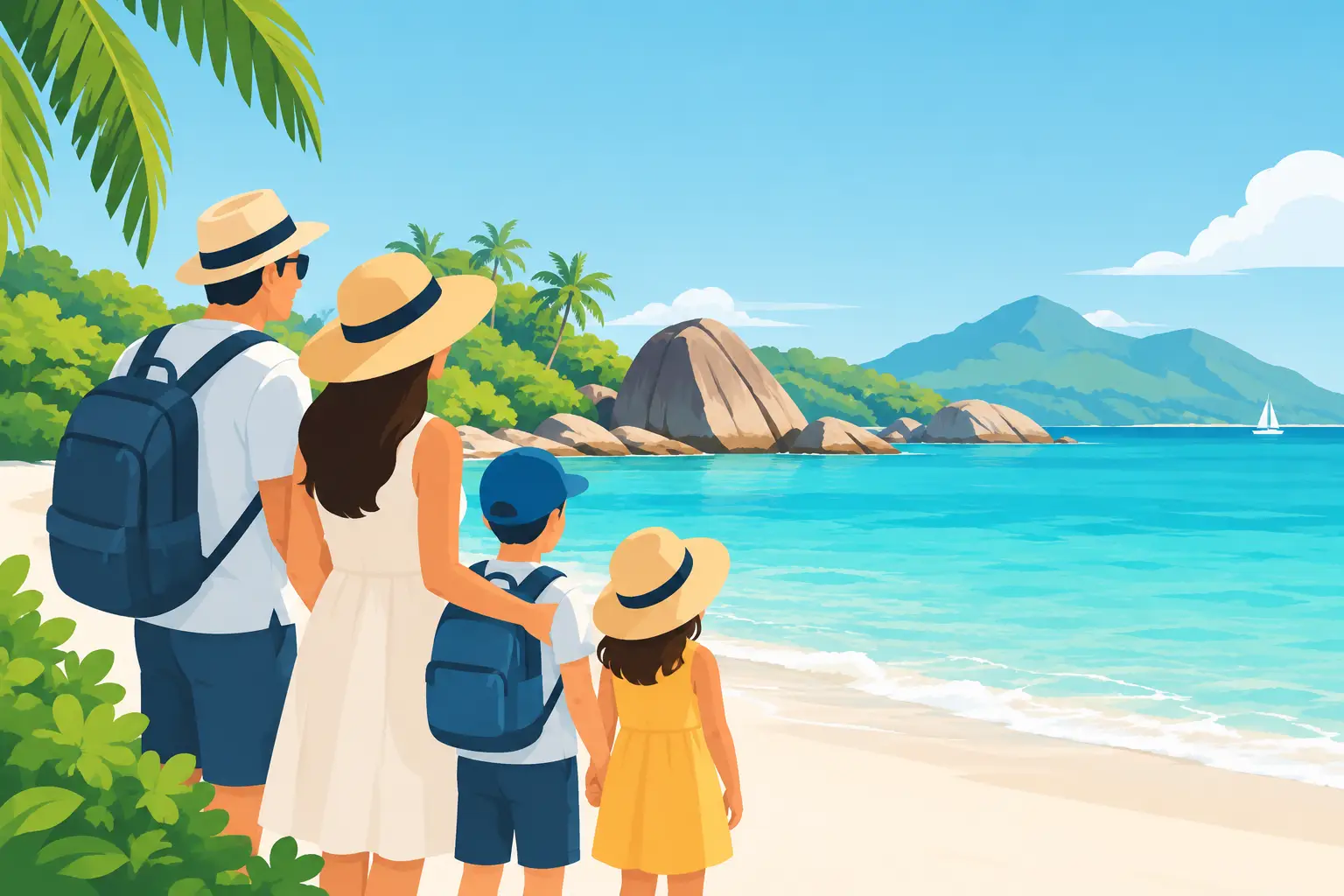
Seychelles Family Travel Safety Guide for Parents
A toddler can go from building a sandcastle to racing towards the Indian Ocean in seconds. That is why a good Seychelles family travel safety guide starts at the beach, not at the airport. Seychelles is wonderfully welcoming for families, with warm water, relaxed island hospitality and plenty of gentle adventures, but its natural beauty deserves sensible preparation.
For most visitors, Mahé, Praslin and La Digue feel calm and secure. The aim is not to turn your holiday into a checklist of worries. It is to know the small local details that help everyone relax, whether you are swimming at Beau Vallon, taking the ferry between islands or sampling fresh grilled fish at a beachside café.
Seychelles family travel safety guide: before you arrive
A little advance planning makes a large difference when travelling with children. If you will hire a car on Mahé or Praslin, request the right child seat when booking rather than assuming one will be available on arrival. Roads can be narrow, steep and winding, particularly away from Victoria, and driving is on the left. A private transfer is often the easier choice after a long flight, especially for families with buggies, car seats and tired little ones.
Pack high-factor, water-resistant sun cream, sun hats, UV swim tops and refillable water bottles. The tropical sun is powerful even on a cloudy morning, and children can burn quickly while playing in shallow water. Lightweight long sleeves are useful for boat trips and late-afternoon walks.
Mosquitoes are part of island life, especially after rain and around lush gardens. Use a family-suitable repellent as directed, keep bedroom doors closed where possible, and choose accommodation with screens or air conditioning if this is a priority. Bring any regular medicines in hand luggage, plus simple essentials such as plasters, antiseptic wipes, oral rehydration sachets and child-safe pain relief.
Travel insurance should cover medical treatment, island transfers and the activities you genuinely plan to do. If your teenager wants to try snorkelling, paddleboarding or a boat excursion, check that these are included rather than relying on a basic policy.
Beach safety is about choosing the right conditions
The sea is often calm, clear and irresistible, but not every beach is right for every child on every day. Wind, tide and season can change the conditions around an island. A beach that is ideal for paddling in the morning may have stronger waves later, while some beautiful stretches have currents that are not obvious from shore.
Ask your hotel host, guide or boat crew where conditions are best that day. This is particularly valuable during the south-east trade winds, when one side of an island may be rougher than the other. Beau Vallon on Mahé is popular with families because it has a lively, accessible shoreline, but parents should still stay close to children and check the water before going in.
Do not assume that a picturesque, quiet beach has a lifeguard. Many do not. Keep young children within arm’s reach in the sea, avoid swimming after dark, and do not let confident older children drift beyond the area you have agreed. If waves are building or locals advise against entering, choose a pool day, a market visit or a different bay. Seychelles rewards flexibility.
Reef shoes can be helpful on rocky entries and in shallow areas where coral fragments may be underfoot. Avoid touching coral, sea urchins or unfamiliar marine life. It protects your family and the reef. If someone gets a cut from coral or rock, clean it promptly and seek local medical advice if it is deep, painful or shows signs of infection.
Snorkelling with children
For a first snorkel, calm, shallow water and a properly fitted mask matter more than finding the most remote reef. A buoyancy aid can give children confidence, but it does not replace close adult supervision. Stay together, point out fish slowly, and make the outing short enough that it remains fun.
Boat trips can be a highlight for school-age children, although the crossing between islands may be choppy. If anyone in the family is prone to travel sickness, speak with a pharmacist or doctor before travelling about suitable options. On board, sit where the crew suggests, keep children seated when the boat is moving, and follow every safety briefing without exception.
Getting around safely with children
On Mahé, traffic is usually manageable, but the road layout requires patience. Avoid trying to cover the whole island in one day with young children. Plan time for comfort stops, snacks and a swim. Roads around the mountains are scenic but bendy, and heavy rain can make visibility poorer.
Taxis and private drivers remove the stress of navigating unfamiliar roads. For families who want to see Victoria Market, the colourful Hindu Temple, Eden Island and a relaxed beach stop without rushing, a customised private day can be far more comfortable than fitting around a large group schedule. Lucas Sey Tours can tailor the pace around nap times, mobility needs and the places your children will genuinely enjoy.
On La Digue, bicycles are part of the charm, but small children should use a suitable child seat or trailer from a reputable hire provider. Test brakes, helmets and straps before setting off. The island moves at a slower pace, yet cyclists still share roads with pedestrians, carts and occasional vehicles.
Food, water and everyday wellbeing
Seychelles has plenty of family-friendly food, from rice dishes and grilled fish to tropical fruit, curries and familiar international options. If your child has an allergy, explain it clearly when ordering and avoid guessing ingredients in sauces, marinades or buffet dishes. Carry translated allergy information if it will make communication easier.
Encourage regular water breaks. Children can become dehydrated while swimming and playing long before they say they are thirsty. Tap water is treated in many visitor areas, but guidance can vary by island and accommodation, so ask your host what they recommend. Keep chilled water available for day trips and use shade as part of the daily routine, not only when someone is already hot.
A slower midday rhythm works well here. Plan a morning outing, return for lunch and rest, then head out again later when the light is softer. It is not lost sightseeing time. It is often the difference between a happy family dinner and an overtired evening.
Wildlife and nature: look closely, leave space
Meeting giant tortoises can be one of the most memorable moments of a Seychelles holiday. Children should watch quietly, keep fingers away from mouths, and follow any instructions at reserves or parks. The same rule applies to birds, crabs and marine creatures: admire them without chasing, feeding or handling them.
On trails, wear secure shoes, take water, and check the route suits your children’s ages. Humidity can make a short walk feel more demanding than expected. Keep to marked paths, particularly near coastal rocks and viewpoints, where wet surfaces can be slippery.
Seychelles is also a place where small choices protect the landscapes your family has come to see. Take rubbish with you, use reef-friendly sun protection where possible, and never remove shells, coral or plants as souvenirs. Children often respond brilliantly when conservation is presented as part of the adventure.
Personal security and emergency preparation
Serious crime against visitors is uncommon, but normal holiday awareness still applies. Keep passports, cash and valuables secured in your accommodation, avoid leaving bags unattended on the beach or in a hire car, and use well-lit areas when out in the evening. A waterproof pouch for a phone and a small amount of cash is more practical than bringing everything to the shore.
Save your accommodation contact, transport provider and insurer’s assistance number on every adult’s phone. Seychelles emergency numbers include 999 for police and fire services, and 151 for ambulance services. Ask your accommodation to confirm the best local procedure for your exact island, particularly if you are staying somewhere remote.
For older children, agree a simple family plan for busy places: where to meet if separated, who they may ask for help, and the name of the hotel or villa. A photo of each child taken that morning can be useful, not because problems are expected, but because good preparation lets parents stay calm if a moment becomes stressful.
The safest family days in Seychelles are rarely the most tightly packed. Leave room for an extra swim, a fresh coconut stop and the local advice that sends you to the calmer beach at exactly the right time. With a little preparation and a flexible plan, your children can remember Seychelles for the right reasons: bright fish, warm sand and the feeling that every island day was made for them.

